
A fast charger usually supplies between 2 and 5 amps for phones; EV fast chargers deliver much higher currents.
I’ve worked with chargers and devices for years, testing different adapters and reading official specs. In this article, I’ll explain how many amps is a fast charger, what that number means, and how it affects charging speed, device safety, and real-world use. You’ll get clear rules of thumb, examples for phones, laptops, and electric vehicles, plus tips to pick the right charger without breaking anything.

What does “amps” mean, and why does it matter for fast charging
Amps measure electric current. Current tells how many electrons move per second. More amps can deliver more power when the voltage is the same. Power equals volts times amps. For chargers, this means higher amps can charge a battery faster if the device accepts that current.
Knowing how many amps is a fast charger helps you match chargers to devices. Too little current slows charging. Too much without proper protocols can stress a battery. Modern chargers use voltage and communication to negotiate safe amps.

How many amps is a fast charger for smartphones and small devices
Smartphone fast chargers commonly range from 1 amp to 5 amps. Older chargers were 1 A or 2 A at 5 V. Today’s fast charging uses higher voltage or higher current. Typical real-world examples:
- 5 V at 3 A equals 15 W, a modest fast charge for old phones.
- 9 V at 3 A equals 27 W, common for mid-range fast charging.
- USB-C Power Delivery allows up to 5 A at higher voltages for up to 100 W.
So when you ask how many amps is a fast charger for phones, expect 2 A to 5 A on the charger side, paired with higher voltages via negotiation. Devices control how many amps they accept.

How USB Power Delivery and Quick Charge use amps and volts
USB Power Delivery (PD) and similar protocols change volts and amps to increase watts safely. Chargers and devices “talk” before sending more current. Key points:
- PD profiles use fixed voltages like 5 V, 9 V, 15 V, and 20 V.
- PD can allow up to 5 A when both sides support USB-C and the right cable.
- Qualcomm Quick Charge raises voltage rather than only amps to reach higher watts.
Understanding volts and amps together answers how many amps is a fast charger. A 30 W charger may deliver 3 A at 10 V or 1.5 A at 20 V. The device picks the best combo.

Laptop, tablet, and high-watt chargers: higher amps by design
Laptops and power-hungry tablets often need more watts. That means higher amps or higher volts. Examples:
- 45 W chargers often run at 20 V and 2.25 A.
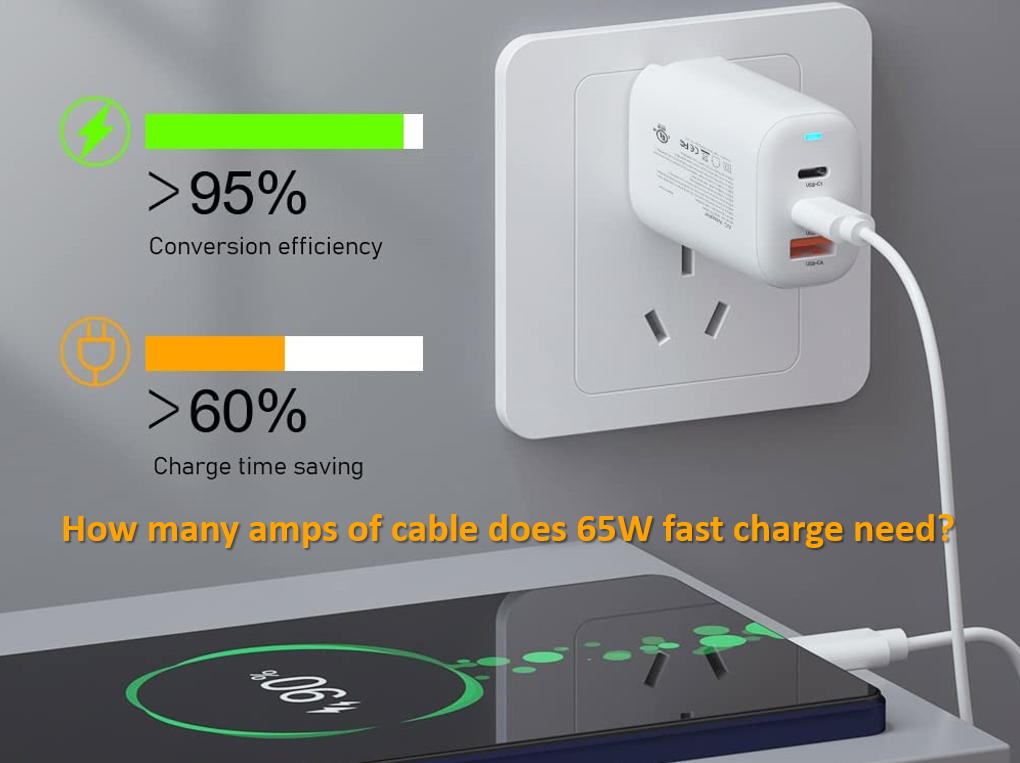
- 65 W chargers commonly run at 20 V and 3.25 A.
- 100 W USB-C PD uses up to 5 A at 20 V.
When you wonder how many amps is a fast charger for a laptop, expect 2 A to 5 A, depending on voltage. Use the cable rating, too. Many cables limit current to 3 A unless they are the 5 A certified type.
Electric vehicle fast chargers: amps jump dramatically
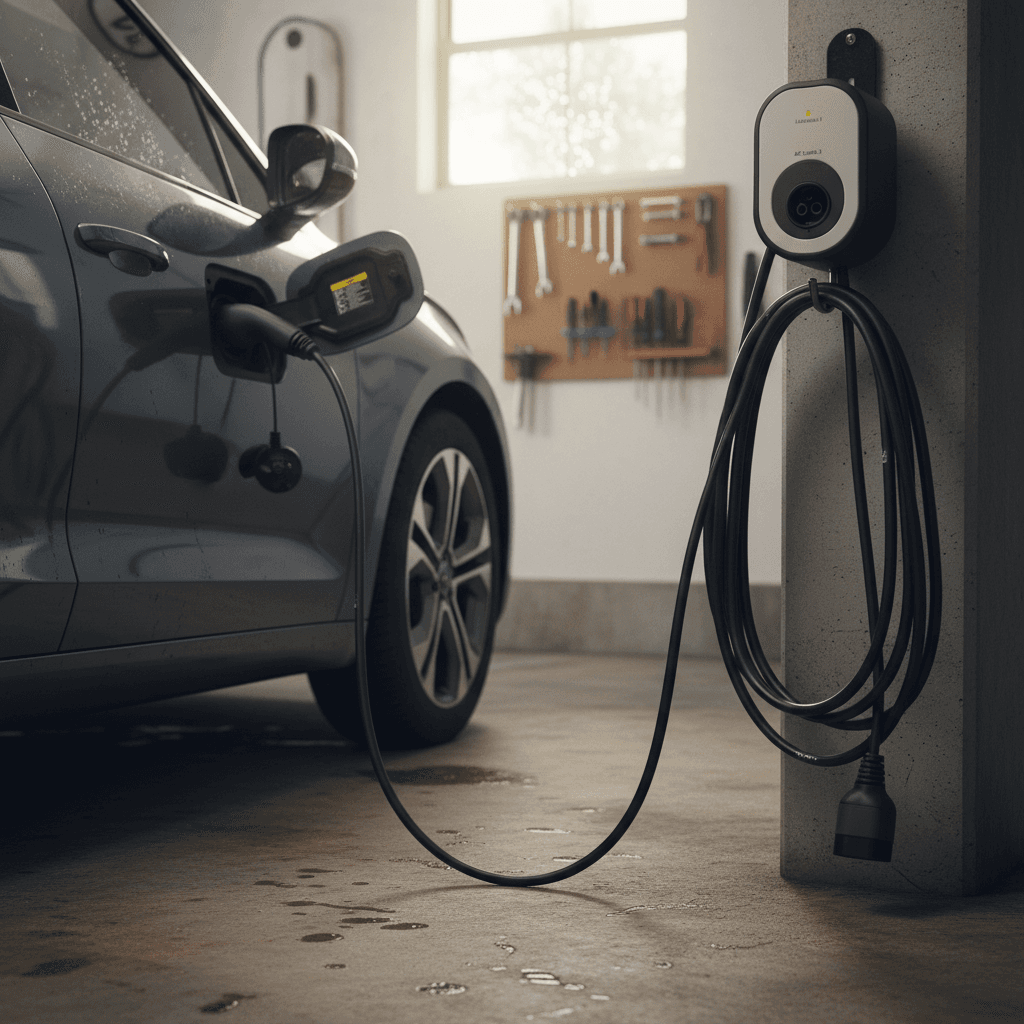
For electric vehicles (EVs), “fast charger” means much higher currents. Station types and their typical amps:
- Level 1 (home outlet) usually provides 12 A to 16 A at 120 V.
- Level 2 (home or public AC) ranges from 16 A to 40 A at 208–240 V.
- DC fast chargers (public) supply hundreds of amps in many cases. Common ranges are 100 A to 500 A, depending on charger power.
As a result, the question how many amps is a fast charger varies massively by context. For EV DC fast charging, the amps are far larger than for phones.
Practical examples and quick math for watts, volts, and amps
Simple math helps you convert and compare. Use Watts = Volts × Amps. Quick conversions:
- 18 W charger at 9 V = 2 A.
- 30 W charger at 10 V = 3 A.
- 65 W charger at 20 V = 3.25 A.
- 100 W PD at 20 V = 5 A.
This math answers how many amps is a fast charger once you know the voltage and wattage. If a charger lists watts, divide by voltage for amps. If it lists amps and volts, multiply to get watts.

Safety, cables, and device limits
Higher amps require proper gear. Points to keep in mind:
- Use certified cables rated for the amp level, especially for 5 A PD.
- Devices limit how much current they accept for battery health.
- Chargers with smart protocols prevent raw overcurrent; they negotiate safe amps.
- Cheap adapters may misreport capabilities and risk overheating.
From my tests, using the wrong cable caused slow charging even with a high-watt charger. Match charger, cable, and device ratings to get safe, fast charging.
How to choose the right fast charger for your needs
Follow a simple checklist:
- Check device charging specs for supported watts and amps.
- Prefer chargers with PD or the proper protocol your device uses.
- Use cables rated for the current; look for 3 A or 5 A markings on USB-C cables.
- For EVs, match your car’s onboard charger and connector type to charger power.
Choosing right reduces charging time and risk. Knowing how many amps is a fast charger helps pick a charger that actually speeds things up.

Common misconceptions and limitations
Many people equate bigger numbers with better performance. Not always true:
- Amps alone don’t define speed; volts matter too.
- A 5 A rating at low voltage can be less power than a lower-amp higher-voltage option.
- Device thermal limits can slow charge even if the charger supplies more amps.
- Marketing terms like “super fast” don’t always align with accepted specs.
I once bought a “65 W” branded charger. It only reached 30 W with my phone because the phone didn’t accept the higher profile. Learn your device specs first.
PAA-style related questions
- How do volts and amps work together for charging?
Higher volts times higher amps equals more power. Chargers and devices negotiate to safely increase charging speed. - Can any cable handle 5 amps?
No. Only cables certified for 5 A support that current safely. Using a lower-rated cable limits current. - Will more amps damage my battery?
Devices regulate charging. If a device accepts higher amps, it negotiates safely. Damage risk rises with poor hardware.
Frequently Asked Questions of how many amps is a fast charger
What is the typical amp range for phone fast chargers?
Phone fast chargers commonly deliver between 2 A and 5 A, depending on voltage and protocol. Many modern chargers use higher voltage with lower amps to reach the same watts.
Can a charger with more amps charge my device faster?
Only if the device supports the higher current and the cable is rated for it. The device decides how many amps to draw.
How do I calculate amps from watts and volts?
Divide watts by volts. For instance, 30 W at 10 V equals 3 A. This tells you how many amps a charger supplies or a device uses.
Do all USB-C chargers support 5 A?
No. Many USB-C chargers and cables support 3 A. Only special USB-C cables and PD implementations support 5 A. Check cable markings and specs.
How many amps are EV fast chargers compared to phone chargers?
EV fast chargers use tens to hundreds of amps. Phone chargers use a few amps. The scales are very different due to battery size and power needs.
Conclusion
Understanding how many amps is a fast charger clears up confusion and helps you choose gear that matches your device. Match volts, amps, and cable ratings. Prefer chargers with proper protocols so devices negotiate safe current. My tip: check device specs first, buy certified cables, and test one charger at a time to see real-world results. Try one upgrade now—pick a charger that fits your device’s needs and watch charging time fall. Leave a comment about your charging setup or subscribe for more practical guides.